

Test reports, restricted substances and declarations of conformity, in Business Central
Retailers and licensors want a declaration that your products meet the law and their own limits. DutyScope keeps the test reports from your factories and labs on the items, checks every result against every list that applies, and issues the declaration only when everything is covered.
From test report to declaration
- 01
Set up the laws and your lists
UK REACH, EU REACH, the EU POPs Regulation and the packaging heavy metals rules are set up. Add an industry list or the restricted substance list of each customer or licensor, with its limits per substance and material.
- 02
Record materials and evidence
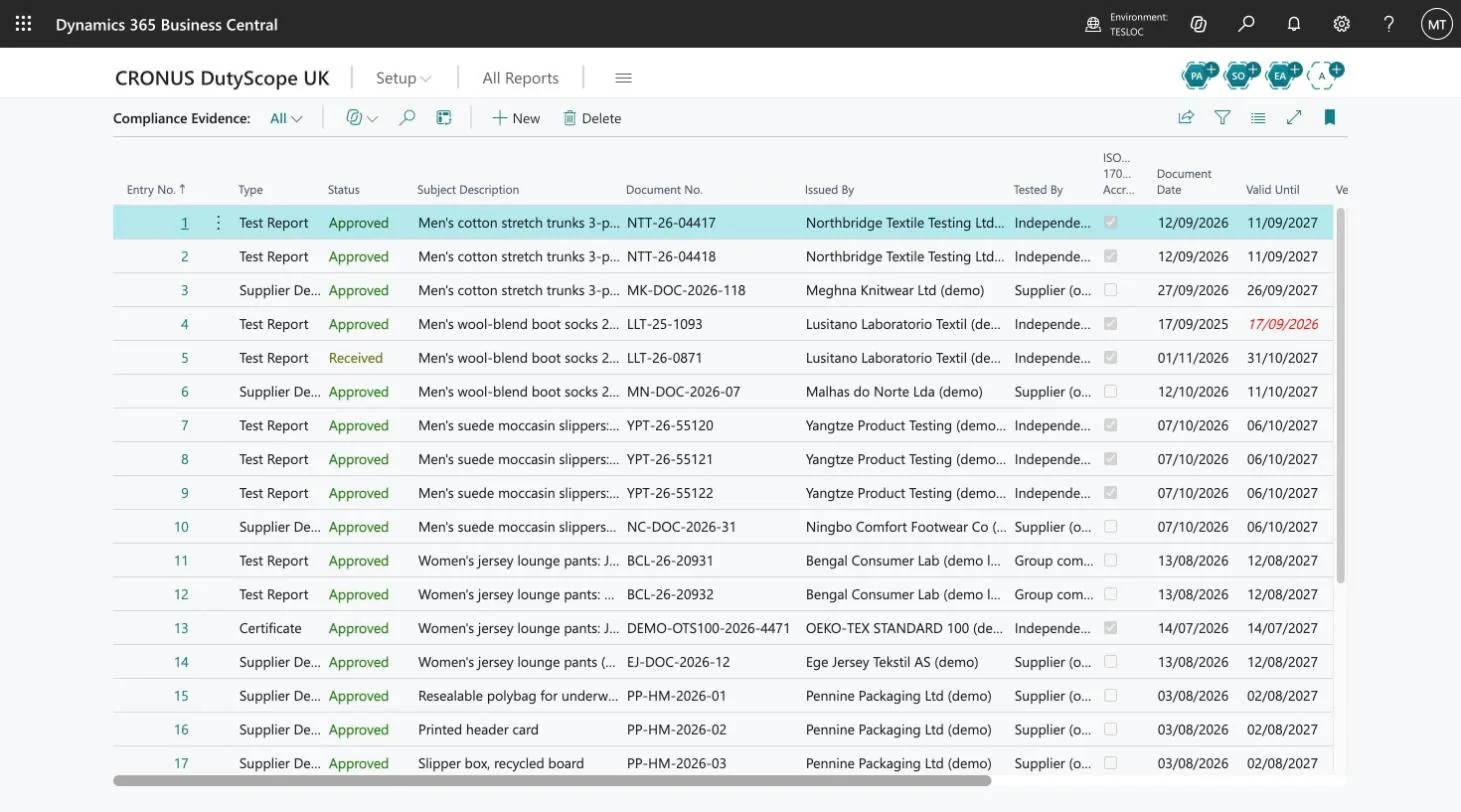
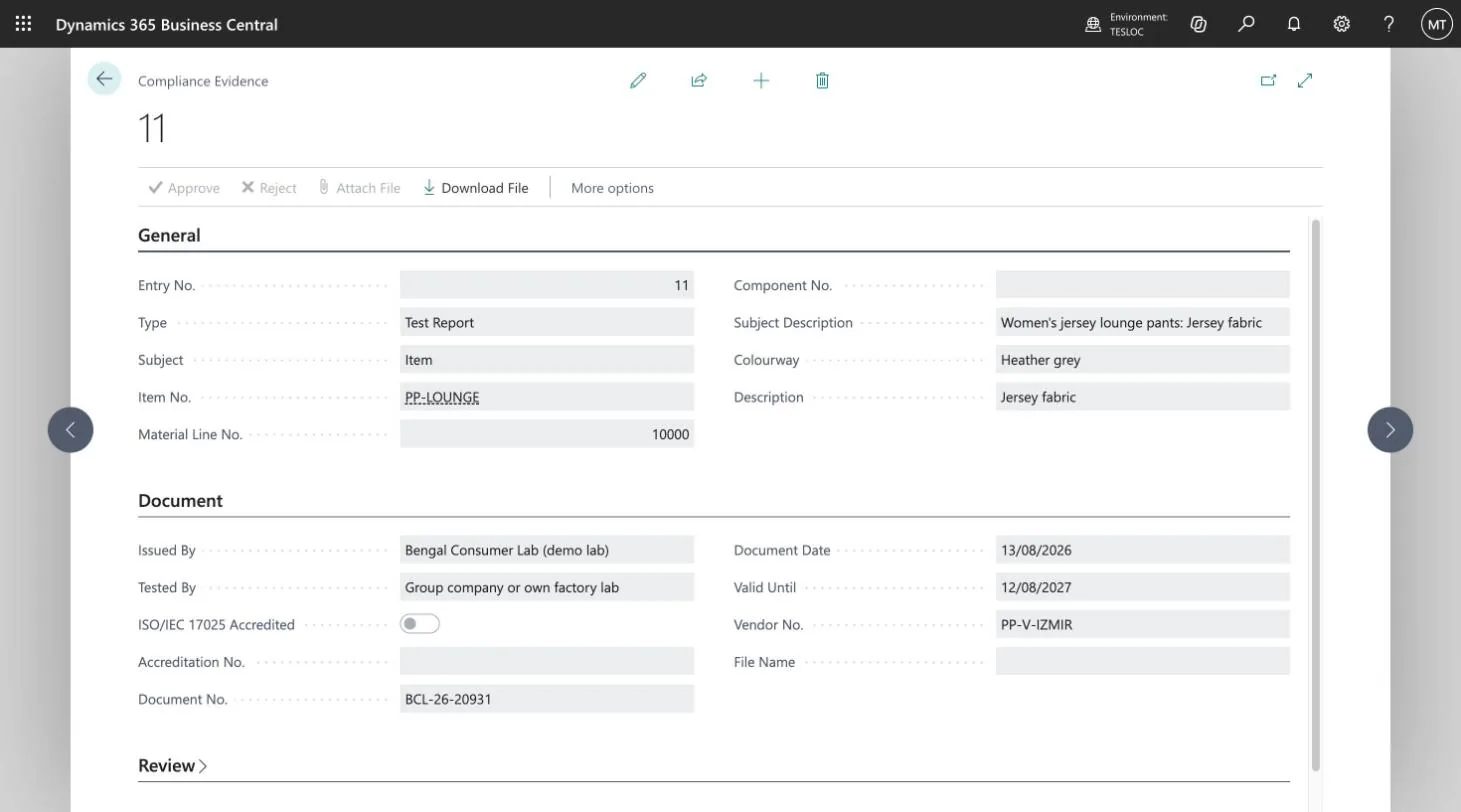
Each item's materials (main fabric, lining, elastic, prints, metal parts) and every test report, certificate or supplier declaration, one line per result, with the PDF attached.
- 03
Approve, then check
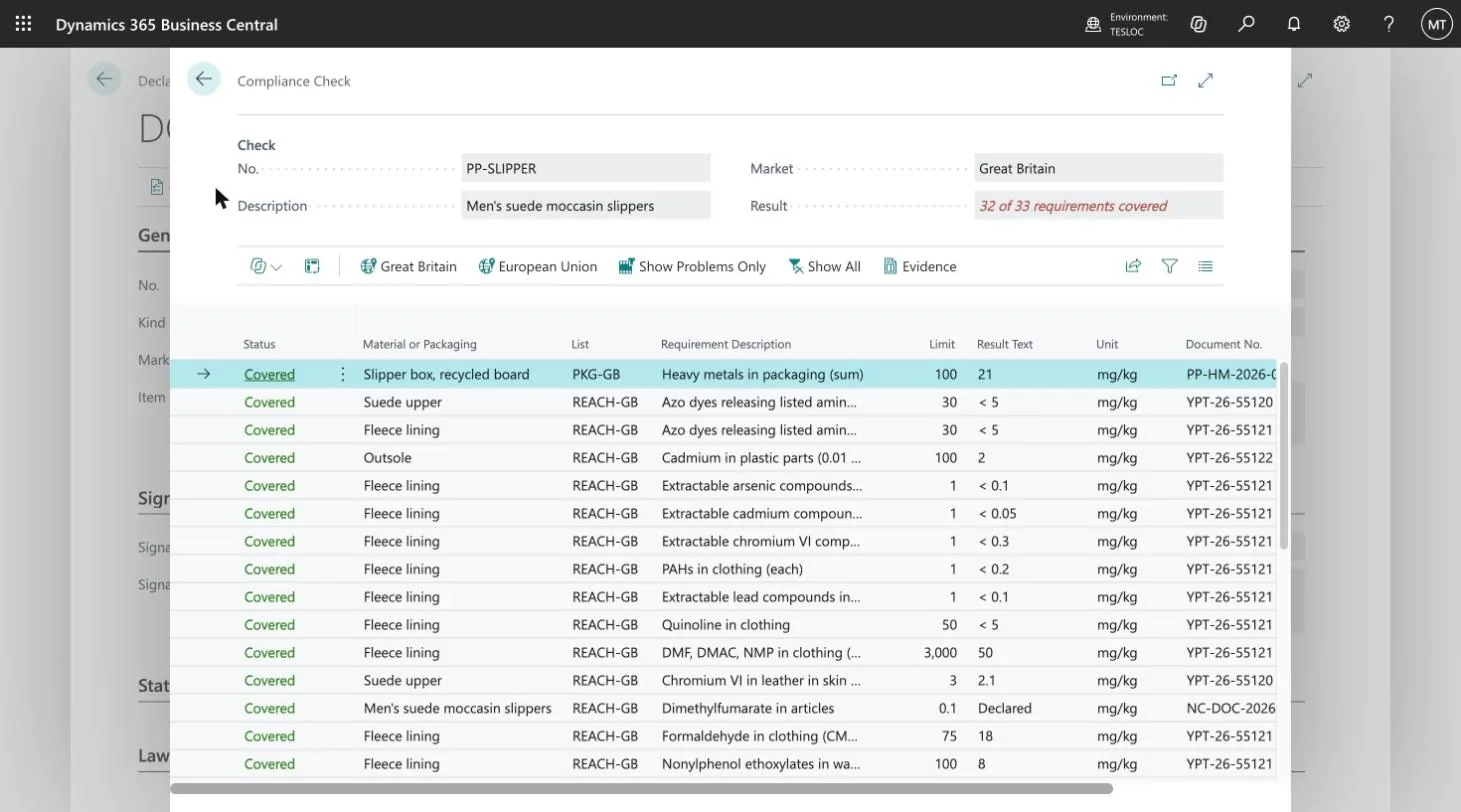
Only approved, valid evidence counts. One result is checked against every law and list that applies: covered, failed, expired, missing, waiting for review, or from a lab the list does not accept.
- 04
Issue the declaration
Per item and market, only when every requirement is covered. It is versioned and locked, and can be printed with the evidence summary behind it.
What you see in Business Central
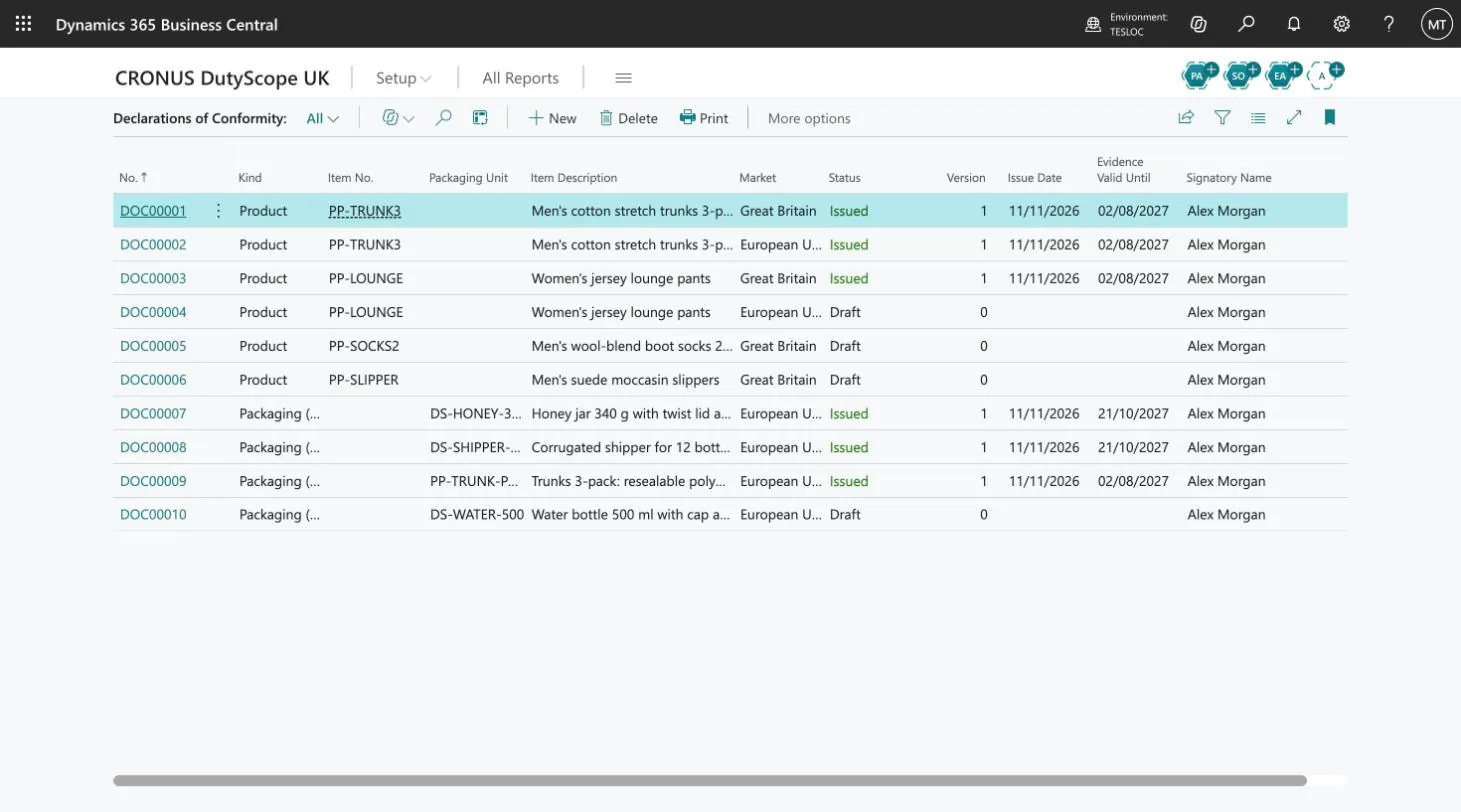
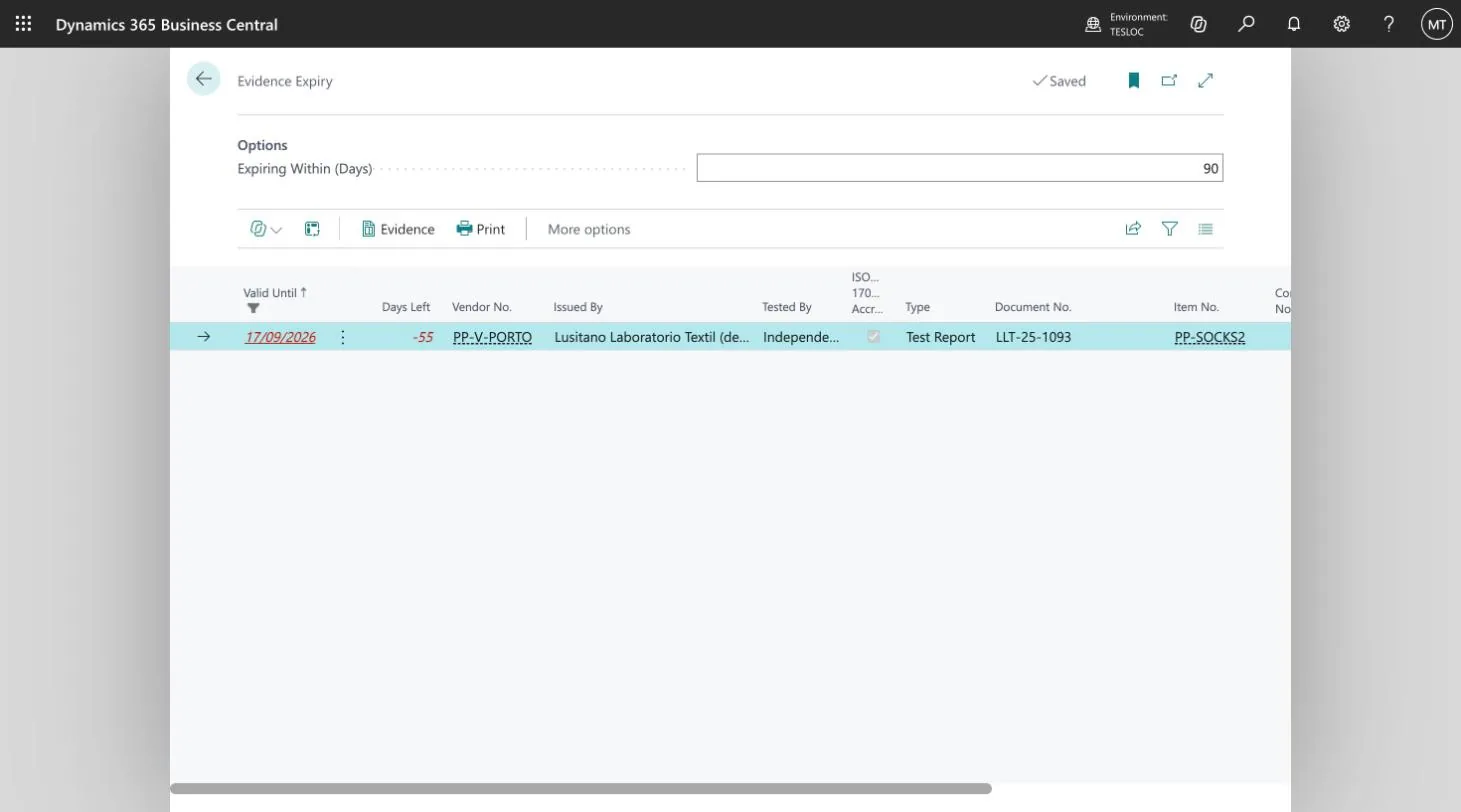
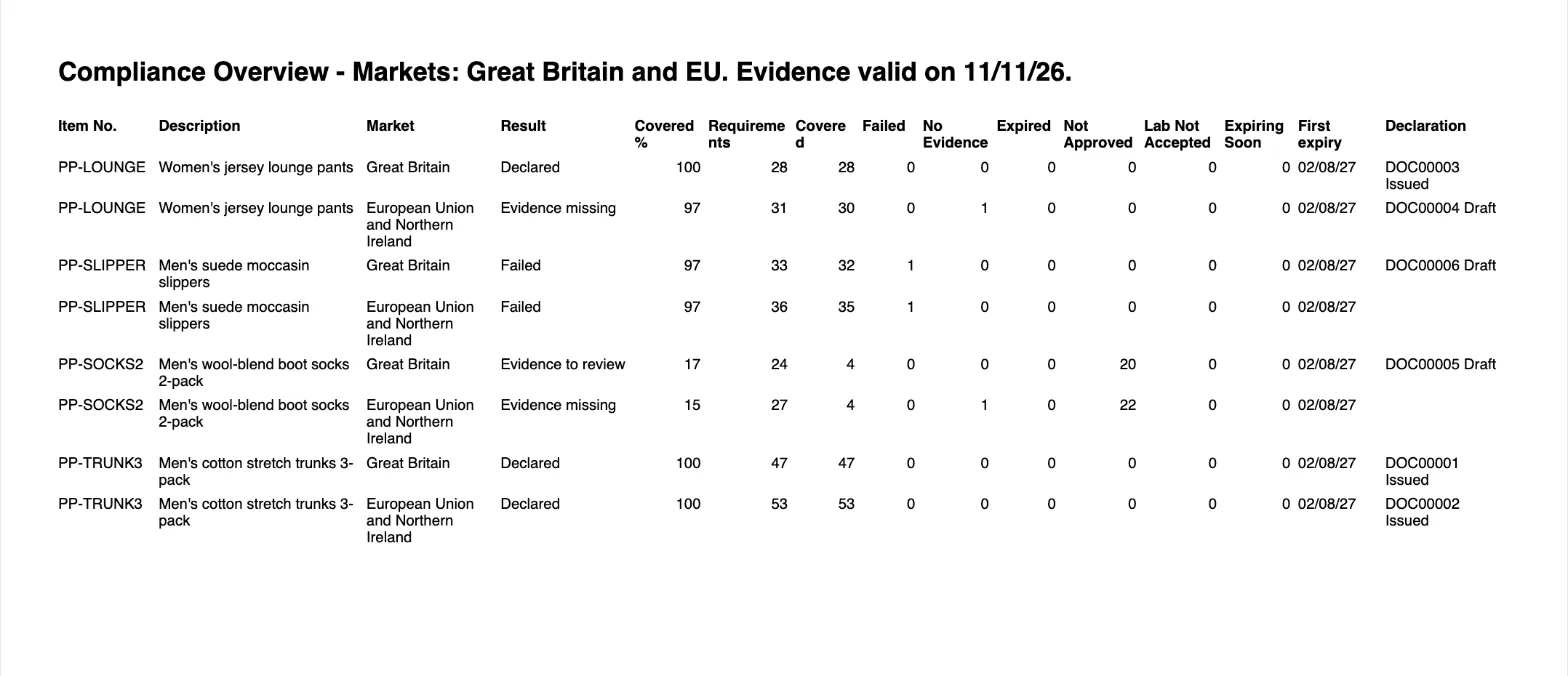
Three reports
Each is a page you can filter and open records from, and each prints.
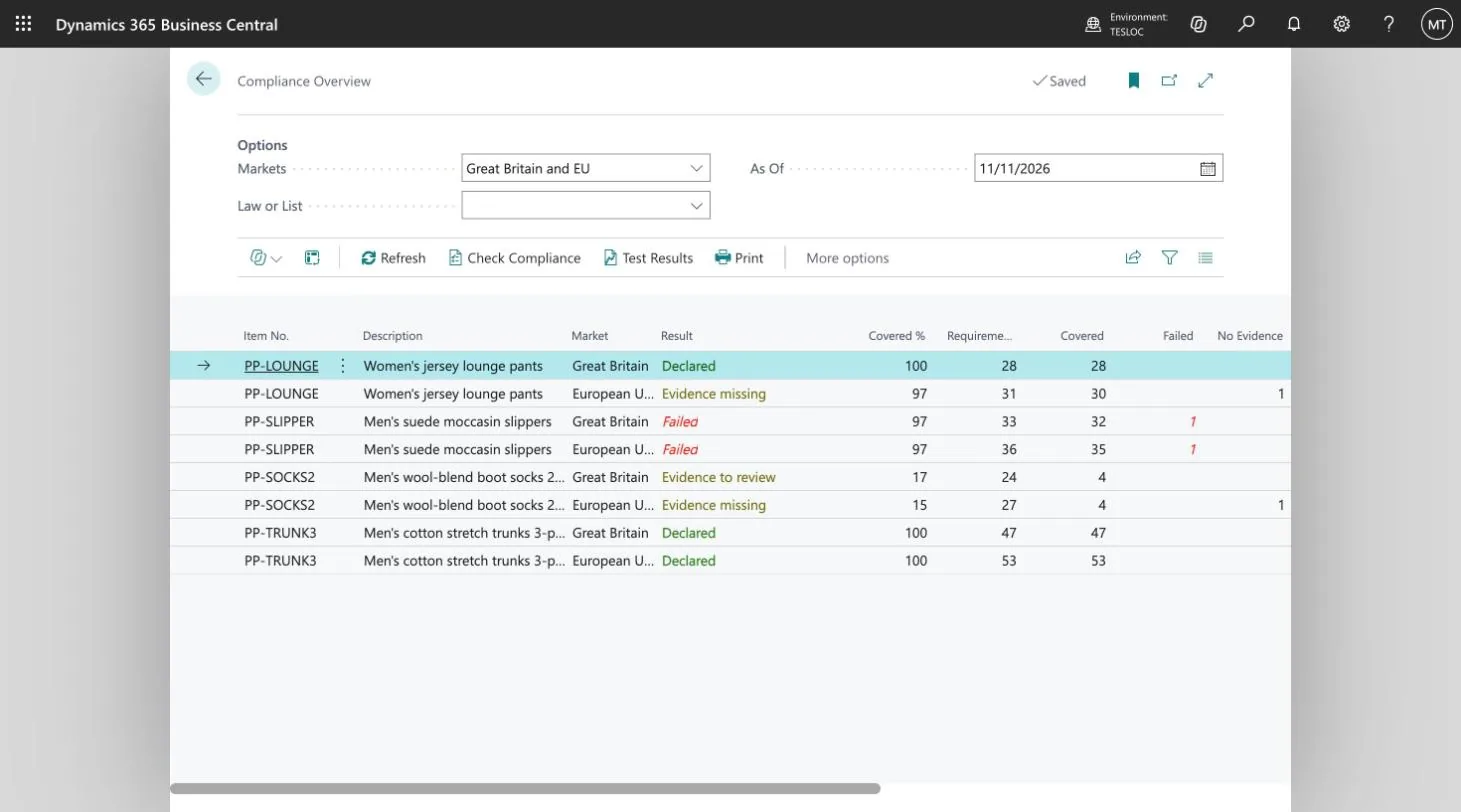
- Compliance Overview
- One line per item and market: declared, ready, or the most serious problem, with counts and the first expiry date. Filter by one customer's or licensor's list, or see the position on another date.
- Test Result Analysis
- Every result against every limit, with the percentage of the limit and a rating, closest to the limit first. It shows results that pass the law but come close to a customer's limit, and who tested them.
- Evidence Expiry
- Approved evidence that expires in the next days you choose or already has, per vendor and lab. Print it and send each factory the list of what to test next.
Questions
Is a declaration of conformity required by law for clothing?
For ordinary clothing and footwear no law prescribes a declaration form. The law asks that the product meets the chemical restrictions of the market (UK REACH in Great Britain; EU REACH and the POPs Regulation in the EU and Northern Ireland) and that you can show it. Retailers, marketplaces and licensors ask for a declaration of conformity, each with their own limits. For packaging sold in the EU, the EU packaging regulation does require one.
Our test reports come from our own factory's lab. Do they count?
DutyScope records who tested each result: an independent laboratory (with its ISO/IEC 17025 accreditation), a group company or own factory lab, or the supplier. When a customer or licensor accepts only accredited independent labs, turn that on for their list: the check then shows the result as not accepted for that list, while it still counts for the lists that accept it.
Can we add our customers' and licensors' restricted substance lists?
Yes. Each list has its requirements: the substance group, the limit and the kind of material it applies to. Assign it to the items it covers, and the check, the declaration and the reports take it into account. A new version of a list is added as a new list.
Does it work without the packaging EPR part?
Yes. Product compliance, packaging EPR and the EU packaging regulation are separate switches on DutyScope Setup. When packaging EPR is used too, the item's packaging components are checked against the packaging heavy metals limit as part of the product.
What does it not do?
DutyScope does not test products and does not decide which laws apply to them; the laws set up are a starting point to check with your compliance adviser. It does not produce CE or UKCA declarations for regulated products such as PPE, toys or electronics.
Customers asking for declarations?
Send us one product, a test report and the list your customer applies, and we'll show you the check and the declaration in a demo company.