

Packaging EPR in Latvia, reported from Business Central
Natural Resources Tax (dabas resursu nodoklis, DRN) with EPR scheme exemption, and PPWR. DutyScope works out what you placed on the Latvia market from your posted shipments and produces what you submit: the figures per official category in the order of the form, in kg and tonnes with the previous period, as a CSV file and on screen, to enter in the portal.
The rules in Latvia
As DutyScope applies them. Researched from official sources on 11 November 2026.
- Law
- Dabas resursu nodokļa likums (Art. 3, 6¹, 8, 24, 27, Annex 7); MK noteikumi Nr. 480 (16.08.2017); Iepakojuma likums; MK noteikumi Nr. 519 (deposit); Regulation (EU) 2025/40 (PPWR)
- Authority
- Valsts vides dienests (VVD) for EPR; Valsts ieņēmumu dienests (VID) for DRN
- Compliance schemes
- Mandatory from 300 kg a year (else double DRN); optional below. Zaļā josta, Latvijas Zaļais punkts, AJ Power Recycling, Zaļais centrs; Depozīta iepakojuma operators (DIO) for deposit drinks packaging
- Report goes to
- Producer responsibility scheme (e.g. Zaļā josta); VID DRN return for non-members
- How often
- Quarterly
- Deadline
- 20th of the month after the quarter (scheme and VID); VID payment by the 23rd
- How it is submitted
- Scheme reporting portal (e.g. atskaites.zalais.lv); VID EDS for DRN returns
- Unit
- Kilograms
- Producers based abroad
- Register with VID or authorise a Latvian person in writing (DRN law Art. 6¹(7))
The EU packaging regulation in Latvia
Regulation (EU) 2025/40 (PPWR) has applied directly in Latvia since 12 August 2026. How Latvia applies it, as researched on 11 November 2026.
- National law
- National rules for the PPWR are being drafted.
- Producer register
- There is no PPWR producer register yet and VVD issues no EPR or PPWR numbers (VVD, 13 August 2026). Registration is likely in 2027.
- Authorised representative
- Not yet in place for the PPWR. Today a foreign producer that does not register with the tax authority needs a written authorisation.
In DutyScope: each packaging unit you place on the EU market gets its check and its EU declaration of conformity, and every released Latvia period gives the PPWR register report beside the EPR report. How the PPWR part works
What you see in Business Central
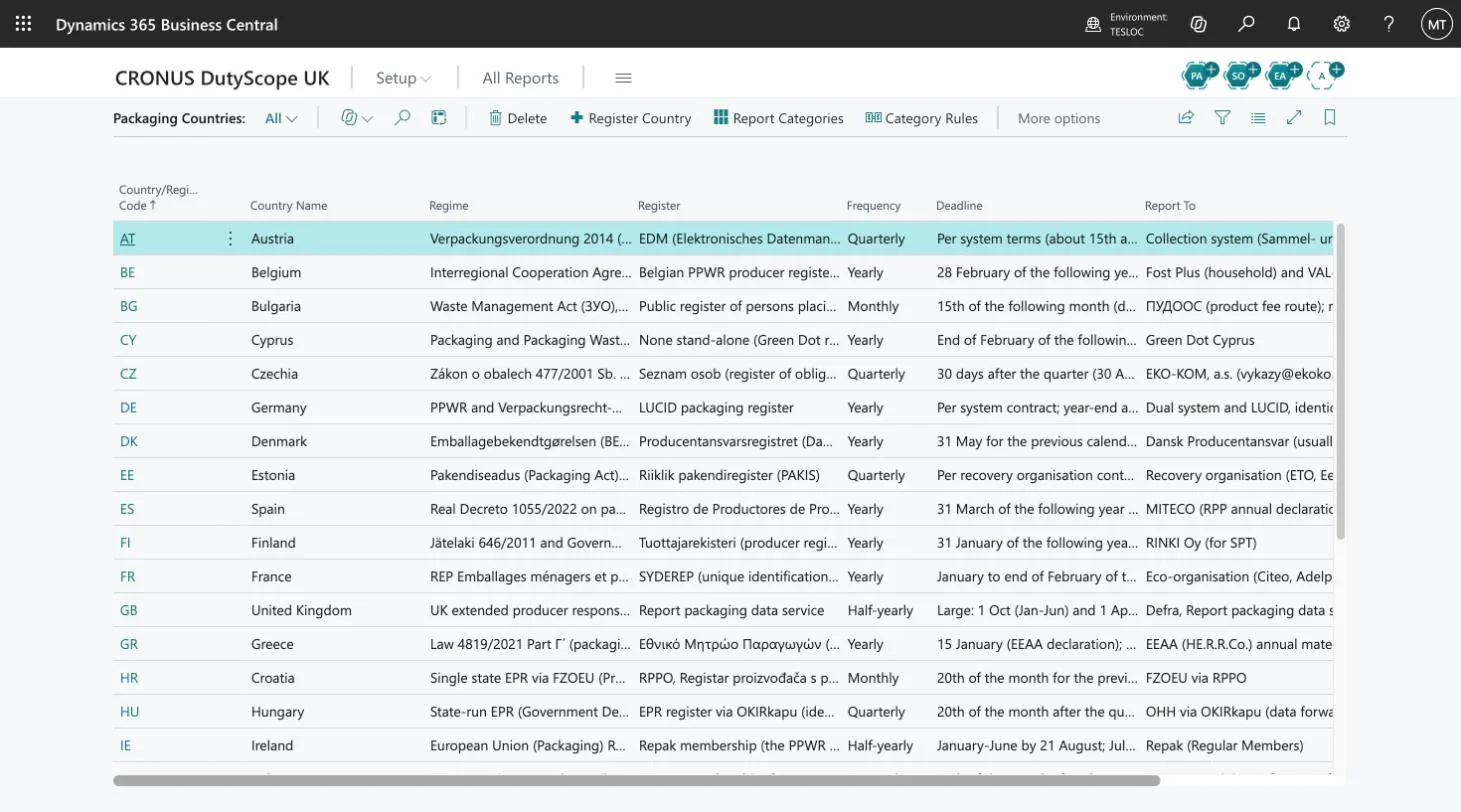
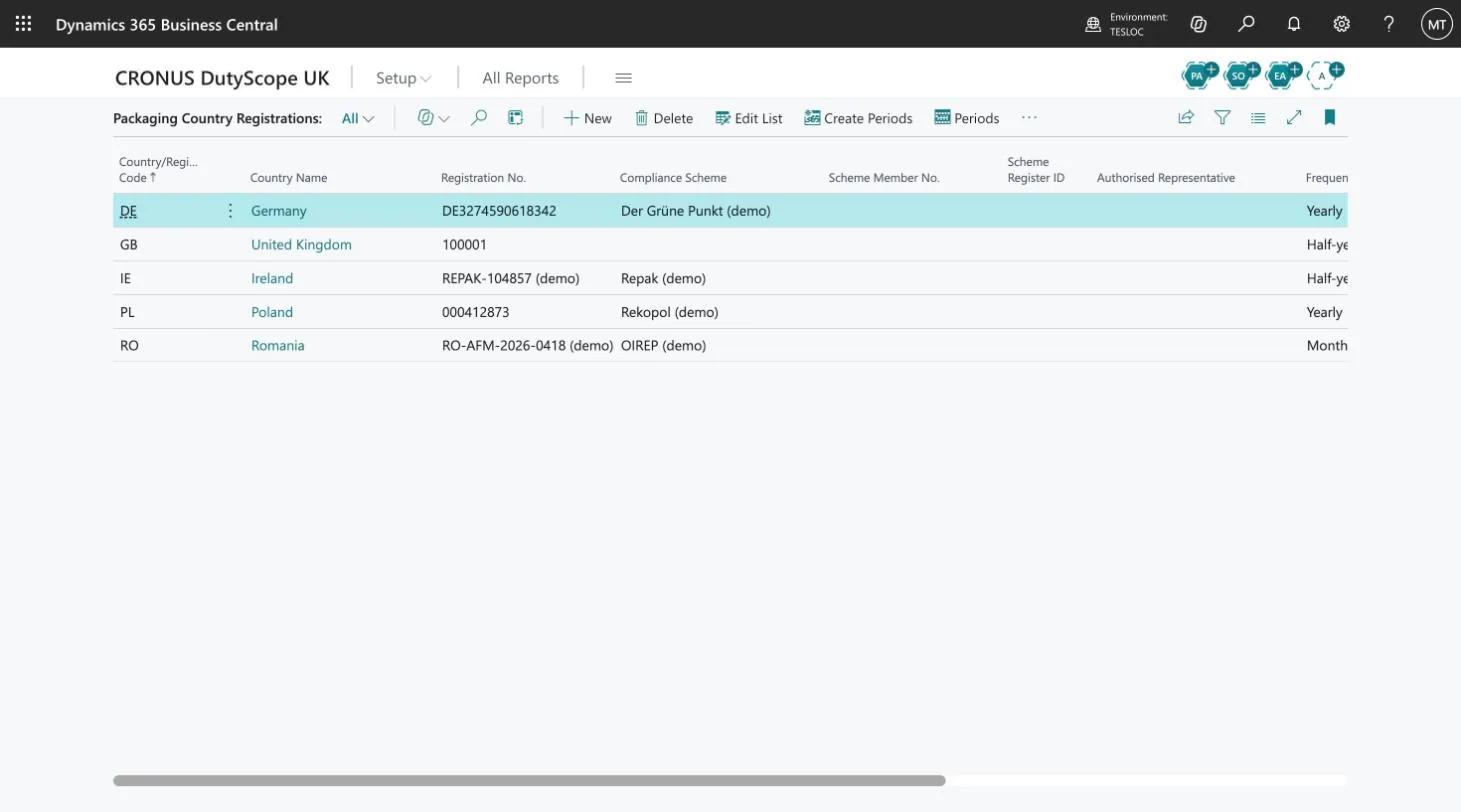
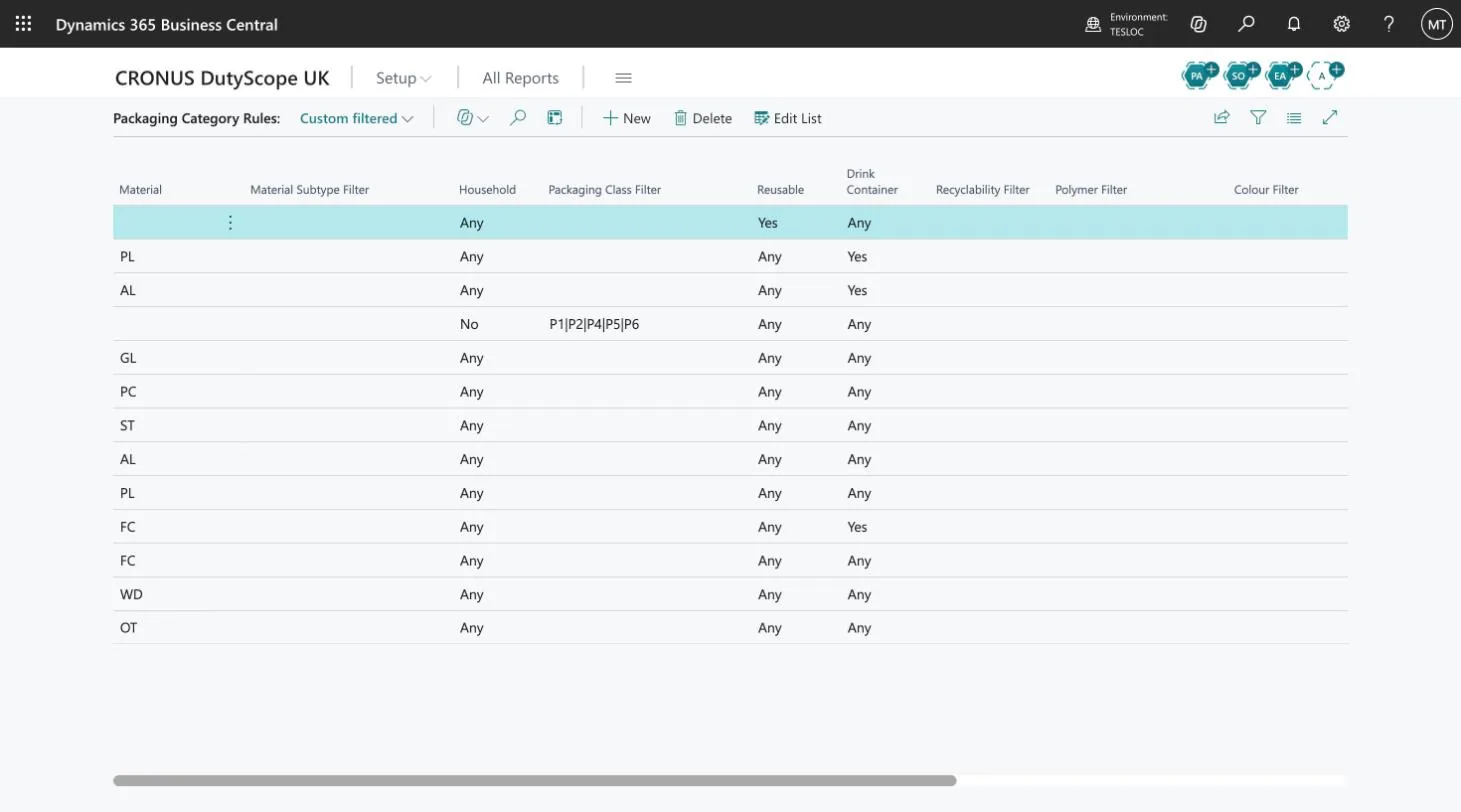
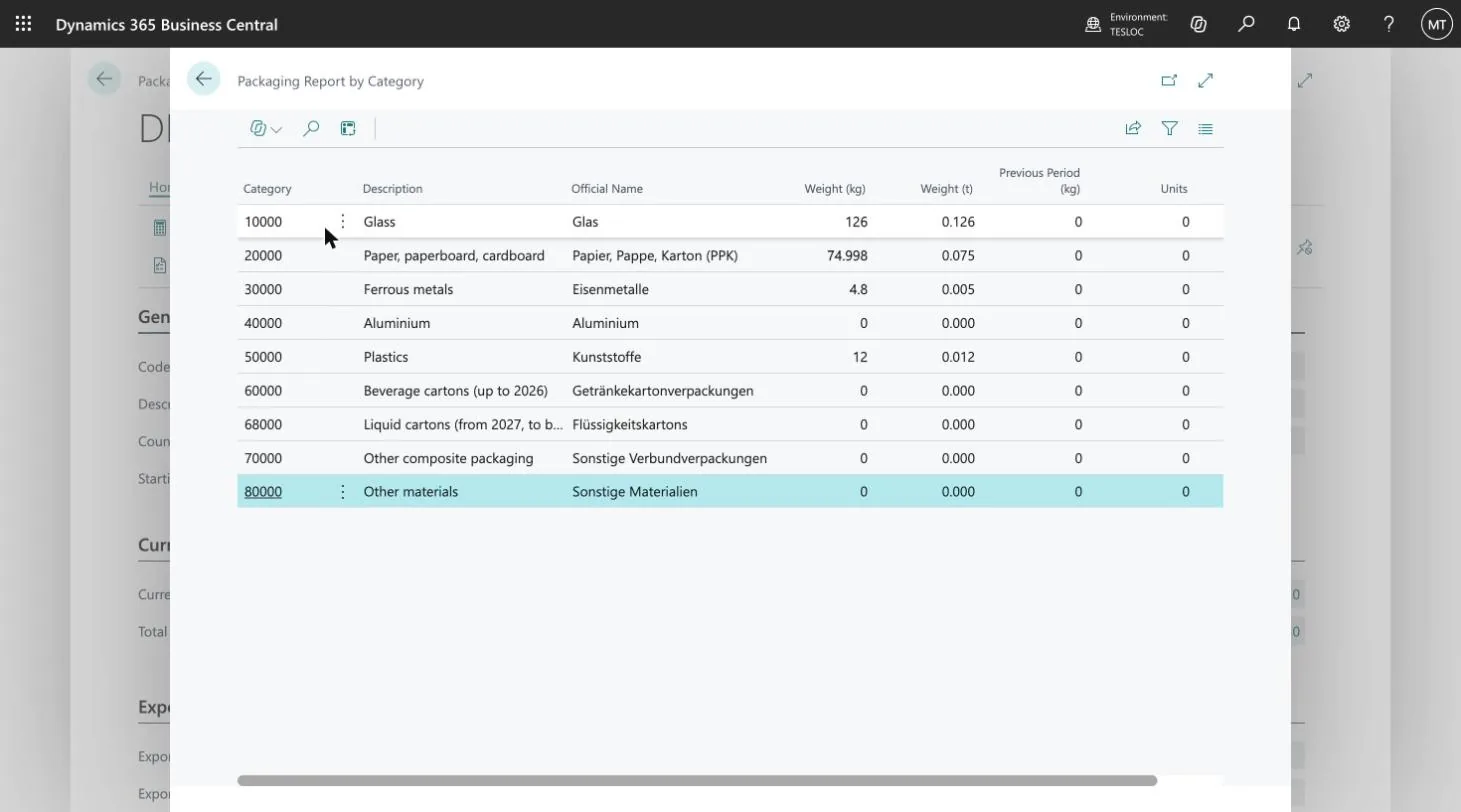
The categories you report in
Each packaging component is described once, by material, weight, household or commercial use, reuse and recyclability. Rules you can change place it in the categories of Latvia.
| Code | Official name | In English |
|---|---|---|
| 1.1-R | Iepakojums – stikls (pārstrādājams) | Glass, recyclable |
| 1.1-NR | Iepakojums – stikls (nepārstrādājams) | Glass, non-recyclable |
| 1.2-R | Iepakojums – plastmasa (pārstrādājams) | Plastic, recyclable |
| 1.2-NR | Iepakojums – plastmasa (nepārstrādājams) | Plastic, non-recyclable |
| 1.3-R | Iepakojums – bioplastmasa (pārstrādājams) | Bioplastic, recyclable |
| 1.3-NR | Iepakojums – bioplastmasa (nepārstrādājams) | Bioplastic, non-recyclable |
| 1.4-R | Iepakojums – polistirols (pārstrādājams) | Polystyrene, recyclable |
| 1.4-NR | Iepakojums – polistirols (nepārstrādājams) | Polystyrene, non-recyclable |
| 1.5-R | Iepakojums – putuplasts (putu polimērs) (pārstrādājams) | Foamed plastic, recyclable |
| 1.5-NR | Iepakojums – putuplasts (putu polimērs) (nepārstrādājams) | Foamed plastic, non-recyclable |
| 1.6-R | Iepakojums – putu polistirols (pārstrādājams) | Expanded polystyrene, recyclable |
| 1.6-NR | Iepakojums – putu polistirols (nepārstrādājams) | Expanded polystyrene, non-recyclable |
| 1.7-R | Vieglās plastmasas iepirkumu maisiņi (pārstrādājams) | Lightweight plastic carrier bags, recyclable |
| 1.7-NR | Vieglās plastmasas iepirkumu maisiņi (nepārstrādājams) | Lightweight plastic carrier bags, non-recyclable |
| 1.8-R | Plastmasas iepirkumu maisiņi (pārstrādājams) | Plastic carrier bags, recyclable |
| 1.8-NR | Plastmasas iepirkumu maisiņi (nepārstrādājams) | Plastic carrier bags, non-recyclable |
| 1.9-R | Papīrs un kartons vai citas dabiskās šķiedras (pārstrādājams) | Paper and board or other natural fibres, recyclable |
| 1.9-NR | Papīrs un kartons vai citas dabiskās šķiedras (nepārstrādājams) | Paper and board or other natural fibres, non-recyclable |
| 1.10-R | Melnais metāls (pārstrādājams) | Ferrous metal, recyclable |
| 1.10-NR | Melnais metāls (nepārstrādājams) | Ferrous metal, non-recyclable |
| 1.11-R | Alumīnijs (pārstrādājams) | Aluminium, recyclable |
| 1.11-NR | Alumīnijs (nepārstrādājams) | Aluminium, non-recyclable |
| 1.12-R | Koksne (pārstrādājams) | Wood, recyclable |
| 1.12-NR | Koksne (nepārstrādājams) | Wood, non-recyclable |
| 2.1-R | Dzērienu vienreiz lietojams plastmasu saturošs iepakojums līdz 3 l – polistirols (pārstrādājams) | Single-use plastic drinks packaging up to 3 l: polystyrene, recyclable |
| 2.1-NR | Dzērienu vienreiz lietojams plastmasu saturošs iepakojums līdz 3 l – polistirols (nepārstrādājams) | Single-use plastic drinks packaging up to 3 l: polystyrene, non-recyclable |
| 2.2-R | Dzērienu vienreiz lietojams plastmasu saturošs iepakojums līdz 3 l – plastmasa (pārstrādājams) | Single-use plastic drinks packaging up to 3 l: plastic, recyclable |
| 2.2-NR | Dzērienu vienreiz lietojams plastmasu saturošs iepakojums līdz 3 l – plastmasa (nepārstrādājams) | Single-use plastic drinks packaging up to 3 l: plastic, non-recyclable |
| 3.1-R | Dzērienu vienreiz lietojams kompozīta iepakojums līdz 3 l – plastmasa (pārstrādājams) | Single-use composite drinks packaging up to 3 l: plastic, recyclable |
| 3.1-NR | Dzērienu vienreiz lietojams kompozīta iepakojums līdz 3 l – plastmasa (nepārstrādājams) | Single-use composite drinks packaging up to 3 l: plastic, non-recyclable |
| 3.2-R | Dzērienu vienreiz lietojams kompozīta iepakojums līdz 3 l – kompozīta kartons (pārstrādājams) | Single-use composite drinks packaging up to 3 l: composite board, recyclable |
| 3.2-NR | Dzērienu vienreiz lietojams kompozīta iepakojums līdz 3 l – kompozīta kartons (nepārstrādājams) | Single-use composite drinks packaging up to 3 l: composite board, non-recyclable |
| 3.3-R | Dzērienu vienreiz lietojams kompozīta iepakojums līdz 3 l – alumīnijs (pārstrādājams) | Single-use composite drinks packaging up to 3 l: aluminium, recyclable |
| 3.3-NR | Dzērienu vienreiz lietojams kompozīta iepakojums līdz 3 l – alumīnijs (nepārstrādājams) | Single-use composite drinks packaging up to 3 l: aluminium, non-recyclable |
| 3.4-R | Dzērienu vienreiz lietojams kompozīta iepakojums līdz 3 l – polistirols (pārstrādājams) | Single-use composite drinks packaging up to 3 l: polystyrene, recyclable |
| 3.4-NR | Dzērienu vienreiz lietojams kompozīta iepakojums līdz 3 l – polistirols (nepārstrādājams) | Single-use composite drinks packaging up to 3 l: polystyrene, non-recyclable |
| 4.1-R | Kompozīta iepakojums (izņemot dzērienu) – plastmasa (pārstrādājams) | Composite packaging (not drinks): plastic, recyclable |
| 4.1-NR | Kompozīta iepakojums (izņemot dzērienu) – plastmasa (nepārstrādājams) | Composite packaging (not drinks): plastic, non-recyclable |
| 4.2-R | Kompozīta iepakojums (izņemot dzērienu) – kompozīta kartons (pārstrādājams) | Composite packaging (not drinks): composite board, recyclable |
| 4.2-NR | Kompozīta iepakojums (izņemot dzērienu) – kompozīta kartons (nepārstrādājams) | Composite packaging (not drinks): composite board, non-recyclable |
| 4.3-R | Kompozīta iepakojums (izņemot dzērienu) – alumīnijs (pārstrādājams) | Composite packaging (not drinks): aluminium, recyclable |
| 4.3-NR | Kompozīta iepakojums (izņemot dzērienu) – alumīnijs (nepārstrādājams) | Composite packaging (not drinks): aluminium, non-recyclable |
| 4.4-R | Kompozīta iepakojums (izņemot dzērienu) – polistirols (pārstrādājams) | Composite packaging (not drinks): polystyrene, recyclable |
| 4.4-NR | Kompozīta iepakojums (izņemot dzērienu) – polistirols (nepārstrādājams) | Composite packaging (not drinks): polystyrene, non-recyclable |
Worth knowing
Recyclable uses the component's rating (G/A). Foam (non-PS) and carrier bags need item details. Composites are split per material: whole FC goes to composite board. Deposit containers go to DIO. Purchases for own use count.
Some details could not yet be confirmed with the authority or the scheme. DutyScope marks the country as not fully checked and lists the open points; confirm them with your scheme before you rely on them. Main source: likumi.lv/ta/id/124707.
Questions
Do we have to report packaging in Latvia if our company is based elsewhere?
The obligation follows the country where packaged goods are first made available. If you sell to customers in Latvia yourself, for example through your web shop or to retailers there, you are usually the producer in Latvia and must register and report there. Producers based abroad: Register with VID or authorise a Latvian person in writing (DRN law Art. 6¹(7)). Check it with a compliance scheme in Latvia.
What does DutyScope produce for Latvia?
The figures per official category in the order of the form, in kg and tonnes with the previous period, as a CSV file and on screen, to enter in the portal. Scheme reporting portal (e.g. atskaites.zalais.lv); VID EDS for DRN returns.
How does DutyScope know which packaging belongs to Latvia?
Every shipment counts in the country of its ship-to address, and every receipt of an item reported at purchase in the country of the receiving location. The Latvia periods count only those shipments, from the packaging specs of the items on the shipment date.
Where do these rules come from?
They were researched from the law, the authority and the schemes' own documents on 11 November 2026, and the app shows the sources. Some details were not yet confirmed with the authority or scheme; the app marks the country as not fully checked and lists the open points, so confirm them with your scheme before you rely on them.
Does the EU packaging regulation (PPWR) change anything in Latvia?
The regulation applies directly in Latvia since 12 August 2026: EU declarations of conformity and marking for packaging, the heavy metals and PFAS limits, and the producer and authorised representative rules. National rules for the PPWR are being drafted. DutyScope covers the declarations and the PPWR register report next to the EPR report.
Can we report in several countries from one company?
Yes. You register each country once; DutyScope keeps one set of packaging data and reports it in each country's own categories, calendar and format.
Also in DutyScope
- EU packaging regulation (PPWR)Packaging units, supplier information, EU declarations of conformity and the register report.
- Product complianceSupplier test reports checked against the law and your customers' and licensors' lists, and declarations of conformity.
- All countriesOne set of packaging data, reported in every country you register.
Selling into Latvia?
We'll show DutyScope on your own items and shipments, and what you would report in each country.